One of the most common questions facilities managers and procurement teams ask when setting up a plant maintenance contract is: how often should visits happen? The honest answer is that there is no universal standard. The right maintenance frequency depends on the type of installation, the environmental conditions of the space, the species mix, and the standard of presentation the property requires.
What follows is a practical framework for thinking about maintenance frequency across the main categories of commercial space in the UAE — and the factors that should drive the decision.
Why Frequency Is Not One-Size-Fits-All
A weekly maintenance visit for a single planter in a back-office corridor is unnecessary. A fortnightly visit for a living wall in a five-star hotel lobby is almost certainly inadequate. The right answer sits in the specifics of the installation and the environment it operates in.
In the UAE, two factors make frequency decisions more consequential than in most other markets. First, the climate creates conditions — particularly during summer — where plant stress escalates quickly without intervention. Second, the standards expected in premium commercial and hospitality environments are high enough that a landscape declining over two or three weeks without a maintenance visit will be noticed by clients and guests before the next scheduled care.
Hotel and Hospitality Environments
For hotels, resorts, and premium food and beverage venues, indoor plants are part of the guest experience. They are consistently visible to clients and guests, they operate under the pressure of high footfall, and they are expected to look exceptional at all times.
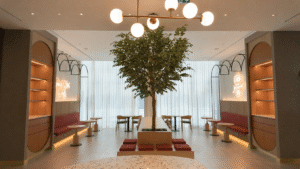
For live plant installations in hospitality environments — lobby trees, planted atrium features, table and corridor planting — once to twice-weekly maintenance visits are appropriate for larger or more complex installations. Weekly visits are the minimum for any live installation that is visible to guests. The frequency should increase during summer months when environmental stress is at its highest.
Artificial plant installations in hospitality settings require less frequent visits for care, but should still receive professional cleaning and inspection at least monthly to maintain the standard expected in a premium environment.
Corporate Offices and Commercial Office Buildings
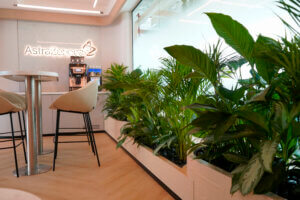
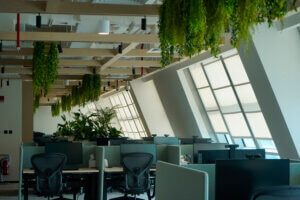
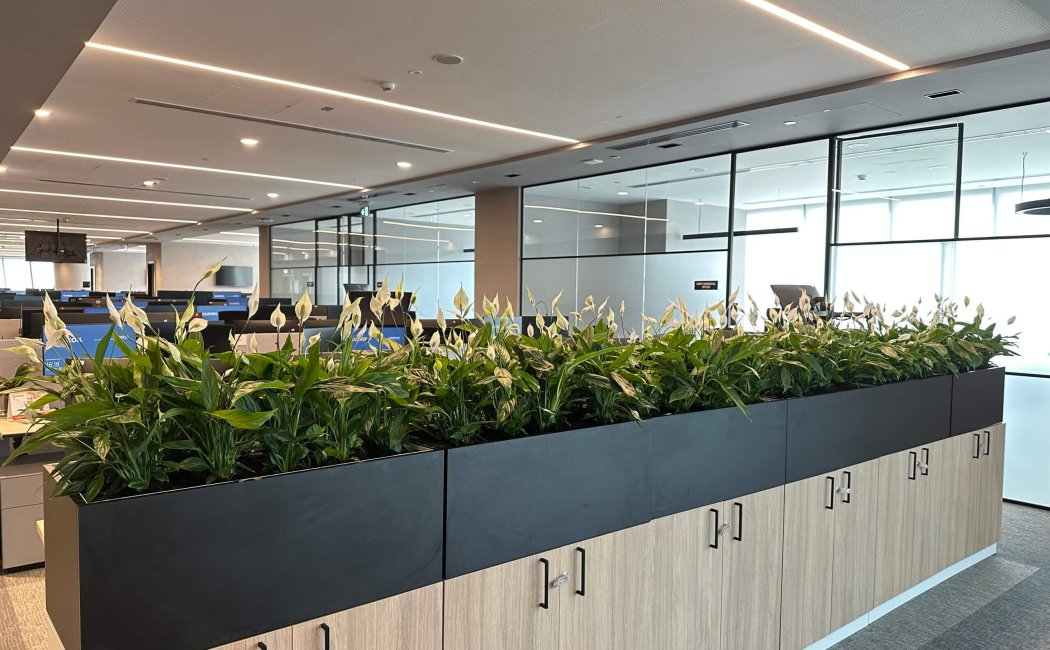
For commercial office environments — DIFC offices, Business Bay towers, corporate headquarters — the maintenance requirement depends heavily on the scale and complexity of the installation and where within the office the plants are located.
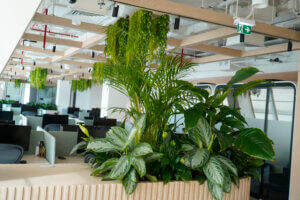
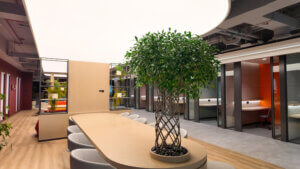
Reception areas and client-facing spaces should be treated with the same care as hospitality environments: weekly maintenance as a minimum, with additional visits during peak seasonal stress. Workstation and back-office planting can typically be maintained on a fortnightly schedule if the species are lower-maintenance and the environment is stable.
Green walls in offices — whether live or moss — require more structured care. A live planted wall needs weekly attention at minimum, with particular focus on irrigation system performance and plant health across the full face of the installation.

Retail and Commercial Amenity Spaces
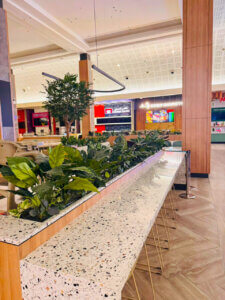
Retail environments present a specific challenge: high footfall means plants are physically disturbed more frequently, and the expectation of a pristine visual environment is constant. For retail spaces using live plants as design features — entrance arrangements, zone-defining planter clusters, statement specimens — weekly maintenance is the appropriate baseline.
Retail environments also tend to have more extreme temperature and humidity variation due to door opening, HVAC adjustments, and the movement of large numbers of people. This increases the frequency at which plants experience stress and makes more regular monitoring worthwhile.
Mixed-Use Developments and Serviced Residences
For mixed-use developments with landscaped common areas — lobbies, rooftop amenity spaces, podium gardens — the maintenance frequency needs to reflect both the visibility of the space and the intensity of use. Fortnightly visits may be adequate for lower-traffic common areas with robust, lower-maintenance planting. Weekly visits are appropriate for any feature installation that is central to the development’s presentation.
Seasonal Adjustment Is Non-Negotiable
Whatever the base frequency, maintenance programmes in the UAE must be calibrated to the season. From June to September, the combination of extreme external heat and aggressive internal air conditioning creates conditions that accelerate plant stress across all commercial environments. A maintenance programme that does not increase its attention during summer is not accounting for the single biggest risk period for indoor plant health in the UAE.
A professional maintenance provider will build seasonal adjustment into the contract rather than requiring the client to request it. If your current programme does not adjust for summer, that is worth addressing.
Indicators That Your Current Frequency Is Too Low
If you are seeing any of the following between scheduled maintenance visits, the current frequency is likely insufficient:
- Visible leaf yellowing or browning before the next visit
- Noticeable dust accumulation on leaves within two weeks of a maintenance visit
- Plants that have lost visual structure — drooping, uneven, or sparse — before the next scheduled care
- Pest activity that has escalated between visits
- Irrigation issues — overwatered or underwatered planters — that are apparent to facility staff
These are signs that the gap between visits is longer than the installation’s needs. The correct response is not to adjust expectations — it is to adjust the frequency.
Making the Decision
The starting point for setting maintenance frequency should be an assessment of the installation by a specialist, not a default package from a price list. A good maintenance provider will visit the space, understand the specific planting, the environmental conditions, and the standard required, and recommend a schedule based on those factors.
For facilities managers managing the budget conversation, it is worth framing maintenance frequency as a protection cost rather than a service cost. The question is not how little maintenance can be done while keeping plants alive — it is how much maintenance is needed to keep the landscape performing at the standard the property requires.