Green building certification has moved from a marketing advantage to an expected baseline across much of the UAE’s commercial property market. LEED, WELL and Estidama, the region’s own sustainability rating system, are increasingly specified in project briefs from the outset, not pursued as an afterthought once construction is complete. Within these frameworks, indoor landscaping has evolved from a discretionary design choice into a measurable, scored component of certification.
For interior designers and developers working on UAE commercial projects, understanding how biophilic design intersects with these certification systems is increasingly a practical necessity, not simply a design preference.
How Certification Systems Score Biophilic Elements
WELL Building Standard
The WELL Building Standard, which focuses specifically on occupant health and wellbeing, includes explicit credit categories for biophilic design. Indoor plants, living walls and access to natural elements contribute directly toward WELL certification points, reflecting a growing body of research linking indoor greenery to measurable improvements in occupant stress levels, cognitive performance and overall wellbeing.
For projects pursuing WELL certification, indoor landscaping is not incidental to the sustainability story: it is one of the more straightforward and cost-effective ways to accumulate credits within the standard’s wellbeing-focused framework.
LEED Certification
LEED, more broadly focused on environmental performance, incorporates biophilic elements primarily through indoor environmental quality credits, which reward design strategies that improve occupant experience and air quality. While LEED’s core focus remains energy and resource efficiency, indoor plants contribute to the human-centred credit categories that many project teams find increasingly important for achieving higher certification tiers.
Estidama and Al Sa'fat
The UAE’s own green building frameworks, Estidama in Abu Dhabi and Al Sa’fat in Dubai, incorporate regionally specific considerations alongside international best practice, including credits related to indoor environmental quality and occupant wellbeing where biophilic design plays a natural role. As these frameworks mature and become more closely aligned with international standards, the expectation for genuine biophilic integration, not token gestures, continues to rise.

What Genuine Biophilic Integration Looks Like
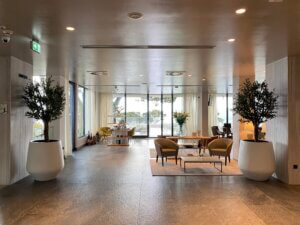
Certification bodies increasingly distinguish between token biophilic gestures, a handful of small potted plants scattered through a space, and genuine biophilic integration, where indoor landscaping is a substantial, well-considered element of the design that meaningfully affects occupant experience.
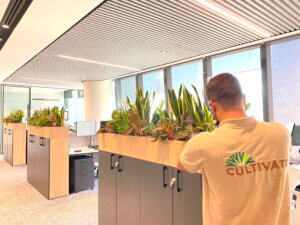
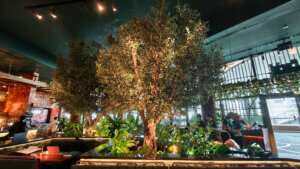
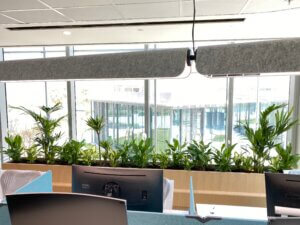
Genuine integration typically includes meaningful coverage relative to floor area, not a token minimum; species and installation types chosen for their actual environmental and wellbeing contribution rather than purely decorative value; and a maintenance plan that ensures the biophilic elements remain healthy and effective over the long term, since a declining, poorly maintained installation undermines the very wellbeing benefits the certification credit is meant to recognise.
The Design and Specification Implications
For designers working on certification-targeted projects, this shift changes how indoor landscaping needs to be approached from the earliest design stages. Rather than treating plants as a finishing touch selected near project completion, biophilic elements need to be planned early enough to be properly integrated into the certification documentation and to secure the structural and MEP provisions, floor loading, irrigation, supplementary lighting, that substantial installations require.
This means engaging a landscaping contractor with genuine understanding of certification requirements, not just horticultural expertise, early in the design process, so the specification can be developed with both design intent and certification scoring in mind simultaneously.
Why This Matters Beyond the Certificate
The growing certification requirement for biophilic design reflects a broader recognition that the underlying wellbeing benefits are real, not merely a scoring mechanism. Buildings with genuine, well-maintained biophilic elements consistently report higher occupant satisfaction, and increasingly, tenants and buyers in the UAE’s premium commercial market are seeking out certified buildings specifically because of the environmental quality those certifications represent.
For developers and designers, this means the investment in biophilic design serves a dual purpose: it satisfies an increasingly standard certification requirement, and it delivers the genuine occupant wellbeing benefit that certification is ultimately trying to measure. The two outcomes are not in tension. They are, when the design is done properly, the same outcome.
Looking Ahead
As certification requirements continue to tighten across the UAE’s commercial property market, indoor landscaping is likely to move even further from an optional design element toward an expected, scored component of any serious commercial development. Designers and developers who build genuine biophilic thinking into their process now, rather than treating it as a late-stage checklist item, will be better positioned as these expectations continue to rise.