The Business Case for Biophilia: How It Boosts Productivity and Wellness
Open-plan offices. Glass towers. Break rooms with vending machines. For decades, corporate spaces were designed with efficiency in mind — but not necessarily human performance.
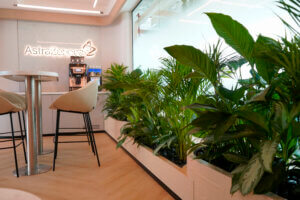
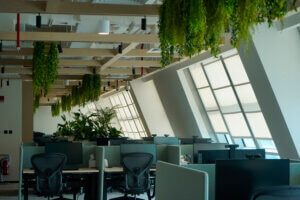
In recent years, however, forward-thinking companies have embraced a different approach: biophilic design — the strategic integration of natural elements into workspaces to improve productivity, creativity, and well-being.
And it’s not just a trend. It’s a proven, high-ROI business decision.
Why Traditional Office Design Isn’t Working
Many corporate environments suffer from a lack of sensory stimulation — fluorescent lighting, dry air, sterile finishes, and zero connection to nature.
This leads to:
- Reduced employee focus and satisfaction
- Increased stress and mental fatigue
- Higher absenteeism and turnover
- A disconnect between company culture and employee experience
As companies rethink office design post-COVID, the physical workplace has become a strategic asset — and one of the most impactful design elements is nature.
The Science Behind Biophilic Design and Performance
Multiple global studies have shown that biophilic design contributes to measurable business outcomes.
Key Findings:
- 15% increase in productivity among employees in biophilic workplaces (Human Spaces Report)
- Reduction in absenteeism by up to 10% in greenery-integrated environments (World Green Building Council)
- Improved air quality and acoustics, leading to fewer sick days and better focus
- Employees report higher satisfaction, creativity, and sense of well-being in green-inspired spaces
In short, bringing nature indoors supports the bottom line — and helps businesses retain top talent in a competitive market.
How Cultivate Brings Biophilia to Corporate Spaces in the UAE
At Cultivate, we help companies move beyond decorative plants — and toward strategic biophilic design that aligns with HR, wellness, and operational goals.
We Work With:
- HR leaders focused on workplace wellness programs
- Facility and operations managers seeking long-term cost savings
- C-suite executives investing in culture, performance, and brand differentiation
Our Biophilic Design Solutions Include:
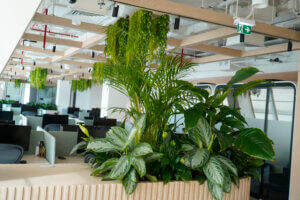
- Indoor green walls to reduce stress and increase oxygenation
- Low-maintenance, natural material palettes that soften acoustics and improve lighting
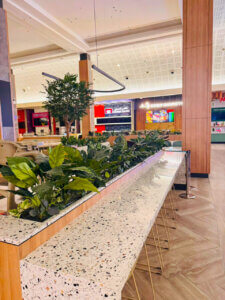
- Planter zoning and layout for breakout spaces, focus pods, and collaborative areas
- Custom corporate biophilia strategies that tie design to wellness KPIs and ESG frameworks
Whether you’re designing a new HQ, refreshing a floor, or launching a wellness initiative, Cultivate creates green spaces that drive both performance and perception.
Making the ROI Case to Leadership
For decision-makers, the real question is: Does this investment pay off?
The answer: absolutely.
Here’s how biophilic design delivers ROI:
- Reduced turnover through improved work satisfaction
- Enhanced focus and productivity without structural changes
- Fewer sick days and lower stress-related absenteeism
- Improved ESG scores and employer brand value
- More positive social and professional reputation as an employer of choice
Ready to future-proof your workspace and elevate team performance?
Let’s talk. Cultivate designs corporate green spaces that make people — and business — thrive.
FAQs
Q1: What is biophilic design in a corporate context?
A: It’s the intentional inclusion of nature-inspired elements — like plants, textures, lighting, and materials — to improve workplace health and performance.
Q2: Does biophilic design cost more?
A: Not necessarily. It can be phased in and scaled based on your space and budget. Long-term savings on health, productivity, and retention often outweigh initial costs.
Q3: How is this different from putting plants in the office?
A: True biophilic design is strategic, integrating natural elements into the layout, flow, and sensory environment of a space — not just surface-level decoration.
Q4: Can this work in already-built office spaces?
A: Yes. Many elements — like modular green walls, smart planters, or mobile dividers — can be added without reconstruction.
Q5: What data can we track to prove ROI?
A: Cultivate helps clients track metrics like sick days, employee satisfaction scores, usage of wellness spaces, and energy savings — all of which contribute to ESG and HR reporting.