In the Middle East’s highly competitive hospitality market, design is no longer just about aesthetics — it is about experience.
Hotels across the UAE and Saudi Arabia are investing heavily in spatial environments that leave a lasting impression on guests. From arrival to check-in, every visual detail contributes to perceived luxury, brand identity, and overall guest satisfaction.
One of the most powerful design strategies driving this transformation is large-scale indoor landscaping.
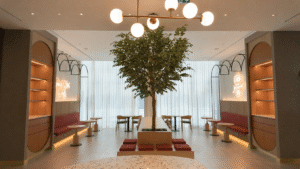
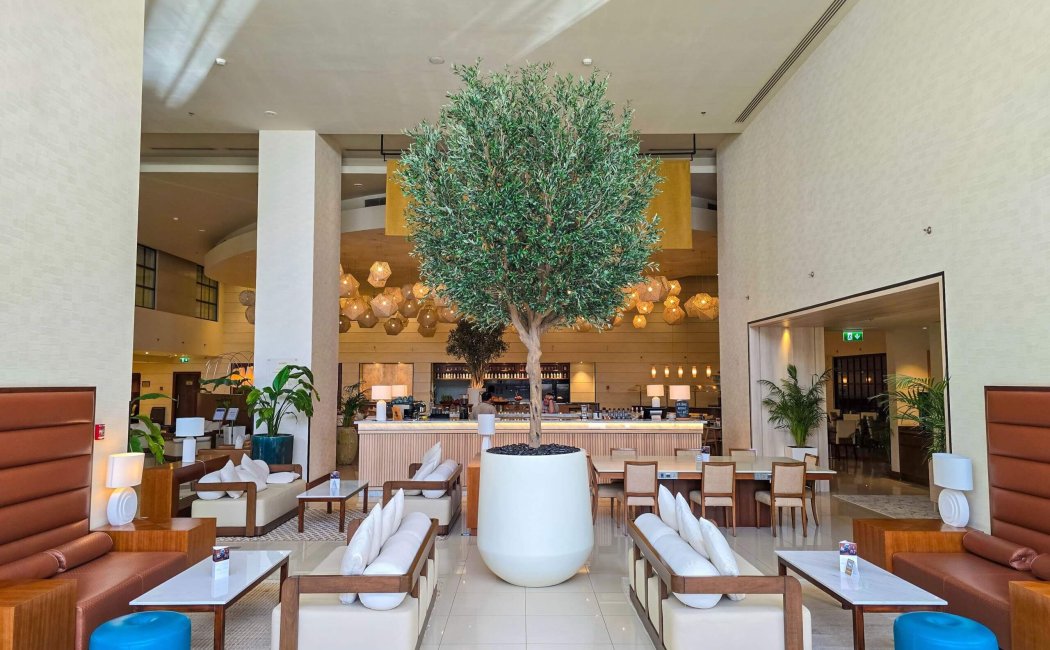
In a recent luxury hospitality project in Saudi Arabia, large indoor trees were strategically integrated into a high-ceiling lobby environment — demonstrating how plant design can elevate commercial interiors into immersive guest experiences.
The Role of Landscaping in Modern Hospitality Design
Today’s hotel guests expect more than clean interiors and efficient service. They expect environments that feel:
- Sophisticated
- Comfortable
- Natural
- Experiential
- Memorable
This is where hotel landscaping in the UAE and Middle East plays a critical role.
Indoor greenery introduces organic contrast to structured interiors, softening architectural lines and creating a welcoming atmosphere.
Project Insight: A Luxury Hotel Lobby in Saudi Arabia
In this project, large indoor trees were used as central design elements within an open lobby layout.
The installation focused on:
- Oversized bespoke planters
- Symmetrical placement for visual balance
- Integration with lounge seating areas
- Vertical alignment with ceiling height
The objective was not simply decoration — it was to create:
👉 A central focal point
👉 A premium arrival experience
👉 A sense of calm within a large open space
The result is an environment that feels both expansive and intimate — a key characteristic of successful hospitality design.
Why Large Indoor Trees Are Essential in Hotel Design
Creating Instant Visual Impact
Large trees define space immediately. They add scale and presence that smaller plants cannot achieve.
Enhancing Guest Experience
Natural elements increase relaxation and emotional connection — directly influencing guest perception.
Improving Spatial Flow
Indoor trees help organize open spaces without the need for partitions.
Technical Execution: Indoor Landscaping in the Middle East
Installing large indoor trees requires:
- Structural load planning
- Controlled irrigation systems
- Climate adaptation strategies
- Long-term plant health planning
Without professional execution, indoor landscaping can quickly fail — especially in air-conditioned environments.
The Importance of Bespoke Planters
Custom planters are critical for both function and design.
They ensure:
- Proper drainage
- Root stability
- Moisture control
- Design integration with interiors
In luxury hospitality, planters are part of the architectural language.
Maintenance: The Key to Longevity
Professional plant maintenance ensures:
- Healthy growth
- Clean foliage
- Consistent visual quality
- Pest prevention
For hotels, this is essential — as guests notice even minor imperfections.
Conclusion
Indoor landscaping in hospitality is no longer optional — it is a defining element of modern hotel design.
Projects like this demonstrate how large indoor trees and bespoke plant installations create environments that enhance guest experience and strengthen brand identity.
For hospitality operators across the UAE and Middle East, investing in professional landscaping delivers both aesthetic and commercial value.