Educational institutions present a specific set of constraints that differ from both corporate and healthcare environments. Budgets are typically tighter and more scrutinised, spaces see heavy daily traffic from large numbers of students, and the facility team is often responsible for a wide range of zones with very different needs, from a quiet library to a busy atrium to individual classrooms. A specification that works well in one zone can fail entirely in another if it is applied without adjustment.
Libraries and Study Spaces
Libraries and dedicated study areas benefit from planting that supports a calm, focused atmosphere without becoming a maintenance burden in a space that is often used outside standard staffed hours. Low light tolerant species that can handle the more subdued lighting typical of study areas, combined with self watering systems that reduce the need for frequent staff intervention, tend to work best here. Placement should keep plants clear of study desks and shelving access routes.
Common Areas and Atriums
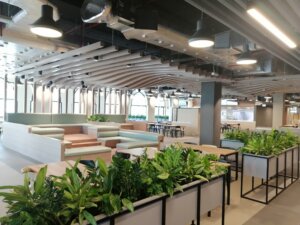
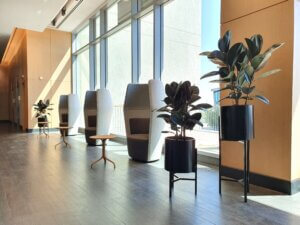
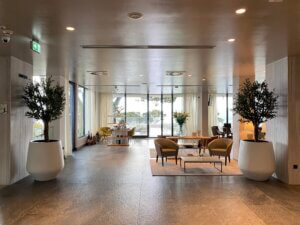
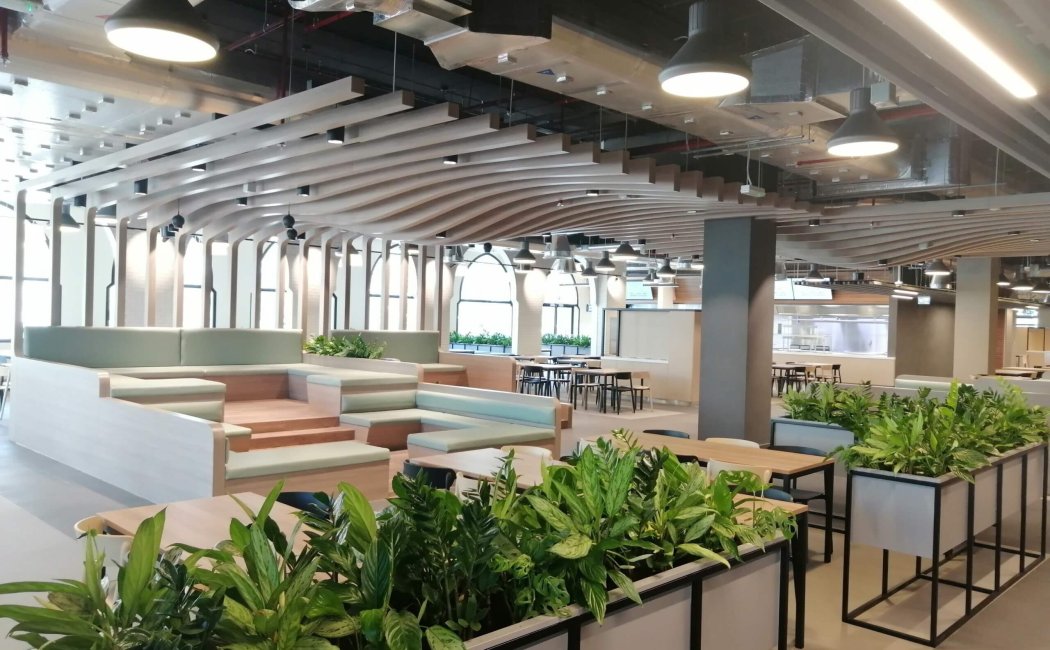
Shared circulation spaces and atriums are usually the highest visibility zones on a campus and the areas where a more ambitious planting scheme delivers the most value per square metre. These spaces can typically support larger specimen planting and more varied palettes, since they often have better natural light and higher ceilings than classrooms. This is also where a campus’s biophilic identity is most visible to prospective students and parents during tours, which makes it a reasonable place to invest more of the planting budget.
Classrooms
Classrooms are the most constrained zone on any campus. Space is at a premium, furniture layouts change frequently, and any planting needs to survive contact with a high volume of young people moving through a compact area multiple times a day. Compact, sturdy species positioned away from primary traffic paths, ideally on shelving or ledges rather than the floor, hold up better than floor standing specimens in this setting.

Budget Sensitivity
Educational institutions, particularly public and semi public ones, tend to operate under tighter and more heavily scrutinised budgets than corporate clients. A phased specification, prioritising the highest visibility common areas first and expanding into classrooms and secondary zones over subsequent budget cycles, is often a more realistic path than proposing a full campus rollout in a single phase. This also gives the facility team a chance to evaluate maintenance performance on a smaller footprint before committing further.
Safety and Durability
Species selection for any zone with regular student contact should exclude toxic or irritant plants as a baseline requirement, similar to the standard applied in healthcare settings. Durability matters more here than in most other verticals, since campus planting will be brushed against, occasionally knocked, and generally subject to more physical contact than a corporate lobby.
Maintenance During Holiday Periods
Academic calendars create maintenance gaps that other verticals do not have to plan around. A campus that empties out for several weeks over a break still has irrigation and light needs that do not pause with the term. A maintenance contract for an educational institution should explicitly address holiday period coverage, either through adjusted self watering capacity or a reduced but non zero maintenance cadence during breaks, rather than leaving plantings unattended for weeks at a stretch.
Planning planting for a school or university in the UAE? Request a phased campus planting proposal from Cultivate, with safe species, durable designs and maintenance that covers the holidays.
Related reading: Specifying Plants for Healthcare and Clinic Interiors, Humidity Management for Indoor Plants.
Planning planting for a school or university campus? Contact Cultivate for a phased proposal.