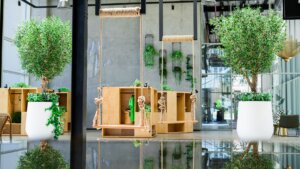
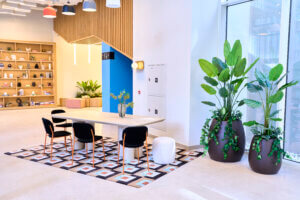
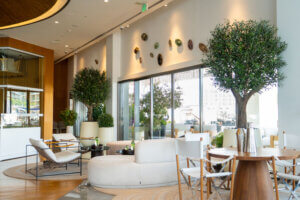
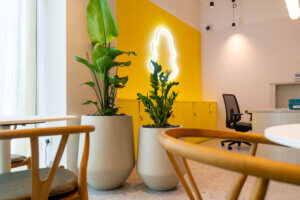
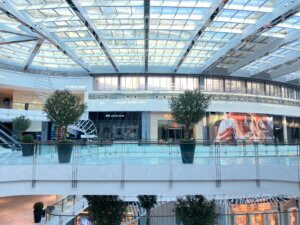
Indoor landscaping has moved firmly into the mainstream of commercial fit-out design in the UAE. Across DIFC, Business Bay, Dubai Hills, and the wider commercial market, plants, green walls, and bespoke planter arrangements are no longer afterthoughts — they are designed elements, specified alongside furniture, lighting, and finishes.
For interior designers and fit-out teams, this shift brings both opportunity and complexity. Landscaping requires coordination with other trades, has specific technical requirements, and needs to be considered much earlier in the design process than it typically has been. Getting the specification right from the start avoids costly changes during installation and ensures the landscape performs as designed from day one.
This guide covers the key stages and considerations for specifying indoor landscaping on a commercial fit-out project in Dubai.
Stage 1: Concept Design — Establishing the Landscape Intent
The earlier landscaping is integrated into the design concept, the better the outcome. Decisions made at this stage affect structural requirements, MEP coordination, and budget — all of which become significantly more difficult to adjust later.
At concept stage, the key questions to address are:
- Is the landscaping functional (space dividers, acoustic treatment, wayfinding) or primarily aesthetic?
- Are live plants, artificial plants, or a combination most appropriate for this space and client?
- Where are green walls, statement specimens, or planter clusters positioned in the floor plan?
- What are the light levels in each zone — natural, supplemented, or entirely artificial?
- What is the maintenance model post-handover?
Briefing a specialist landscaping contractor at concept stage — rather than after the design is fixed — allows these questions to be answered with technical input rather than assumptions. In Dubai’s market, where projects move quickly and specification windows are short, early engagement avoids programme delays later.
Stage 2: Technical Specification — The Details That Matter
Once the design intent is established, the technical specification needs to address several areas that are commonly overlooked until they become installation problems.
Structural Loading
Large planters — particularly those containing mature trees or dense planting — can be significantly heavy when fully planted and watered. Floor loading capacity needs to be confirmed, and large installations may require structural engineer sign-off. This is especially relevant for upper floors and raised platforms in fit-out projects.
Drainage and Waterproofing
Live plant installations require either drainage to waste or self-contained irrigation systems. The specification should define which approach is being used, and waterproofing of the surrounding floor finish must be coordinated with the landscaping package. For green walls, the irrigation system and any leak containment measures need to be incorporated into the MEP design.
Lighting
Most indoor plants require a minimum level of light to thrive. In spaces with limited natural light — which describes a significant proportion of commercial interiors in Dubai — supplementary grow lighting needs to be specified as part of the landscape package. This has electrical supply implications that need to be coordinated with the MEP consultant. Specifying the planting without addressing lighting is one of the most common reasons live installations underperform after handover.
Planter Selection and Integration
Bespoke planters are increasingly specified as design elements in their own right — coordinated with material palettes, embedded into joinery, or custom-fabricated to match furniture profiles. Early involvement of the landscaping contractor in planter design ensures that the horticultural requirements (drainage, root volume, access for maintenance) are met within the design constraints.

Stage 3: Procurement — Working With the Right Contractor
Indoor landscaping for commercial fit-outs in the UAE sits in a specific niche. It requires both horticultural expertise and commercial project management capability — the ability to coordinate with other trades, meet programme milestones, and deliver to a high standard in occupied or live environments.
When evaluating landscaping contractors for a fit-out project, the relevant questions are:
- Do they have a demonstrable portfolio of commercial fit-out projects at the relevant scale and standard?
- Can they supply both live and artificial plants, and advise objectively on the right approach for each zone?
- Do they manufacture or source bespoke planters, or are they limited to off-the-shelf options?
- What is their post-installation maintenance offer, and is it structured for long-term performance?
- Can they provide technical input at design stage, or do they only engage at installation stage?
For designers working on multiple projects, establishing a relationship with a single trusted landscaping partner — rather than retendering project by project — typically produces better outcomes on programme, quality, and coordination.
Stage 4: Installation Coordination
On most fit-out programmes, landscaping is among the last trades to install. This creates pressure to compress the installation window, which is manageable with good programme coordination but problematic without it.
Key coordination points for the installation phase:
- Confirm that floor finishes, joinery, and ceiling works are complete in the landscape zones before plant installation begins
- Ensure MEP works — irrigation supply, grow light electrical connections — are signed off before the landscaping contractor mobilises
- Allow sufficient programme time for large live plants to be acclimatised and for the installation team to work without being rushed
- Agree snagging standards and defect liability period terms before handover
A Note on Live vs. Artificial for UAE Fit-Outs
The question of live versus artificial plants comes up on virtually every commercial fit-out in Dubai. The honest answer is that the right solution depends on the specific conditions of each zone — light levels, maintenance access, client appetite for an ongoing maintenance programme, and the design intent.
In many high-quality commercial projects, a hybrid approach delivers the best result: live plants in zones with adequate light and maintenance access, high-quality artificial specimens in zones where the conditions make live planting impractical. A specialist contractor can advise on this mix at design stage, before it becomes a post-installation problem.
Bringing It Together
The commercial fit-out market in Dubai moves at pace, and landscaping that is properly integrated into the design and specification process adds significant value to the finished space. The projects that get it right share a common approach: early contractor engagement, technical specification that addresses the practical requirements, and a clear plan for post-installation maintenance.
For interior designers and fit-out teams looking for a landscaping partner in the UAE that can engage at design stage and deliver to commercial standards, the conversation is worth starting early.b