The New Standard for Educational Environments
Educational institutions in the UAE are evolving.
Universities and schools are no longer designed purely for academic function—they are built as holistic environments that support learning, collaboration, and student wellbeing. Modern campuses must feel engaging, accessible, and human-centered.
One of the most effective ways to achieve this transformation is through educational landscaping in the UAE.
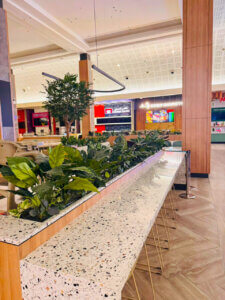
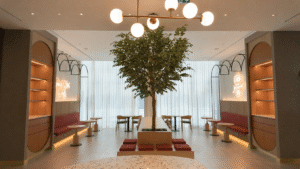
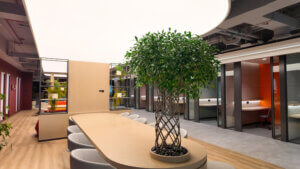
In a recent university campus project in the UAE, landscaping was strategically integrated across student zones, seating areas, and shared spaces—demonstrating how greenery can enhance both the academic experience and the overall campus environment.
The Challenge: Designing for Learning, Not Just Movement
Educational spaces face a unique challenge.
Unlike offices or hospitality environments, campuses must support multiple functions simultaneously:
- Focused study
- Social interaction
- Relaxation
- Movement between classes
At the same time, institutions must consider:
- High daily foot traffic
- Long-term durability
- Cost efficiency
- Ease of maintenance
The challenge was clear:
How do you design a landscape that supports both academic performance and student experience—without increasing operational complexity?
The Strategy: Integrating Greenery Into Everyday Campus Life
The approach focused on embedding landscaping into how students use the space, rather than treating it as a separate visual layer.
This meant designing greenery that:
- Enhances usability
- Improves comfort
- Supports social interaction
- Requires minimal oversight
Built-In Planter Seating
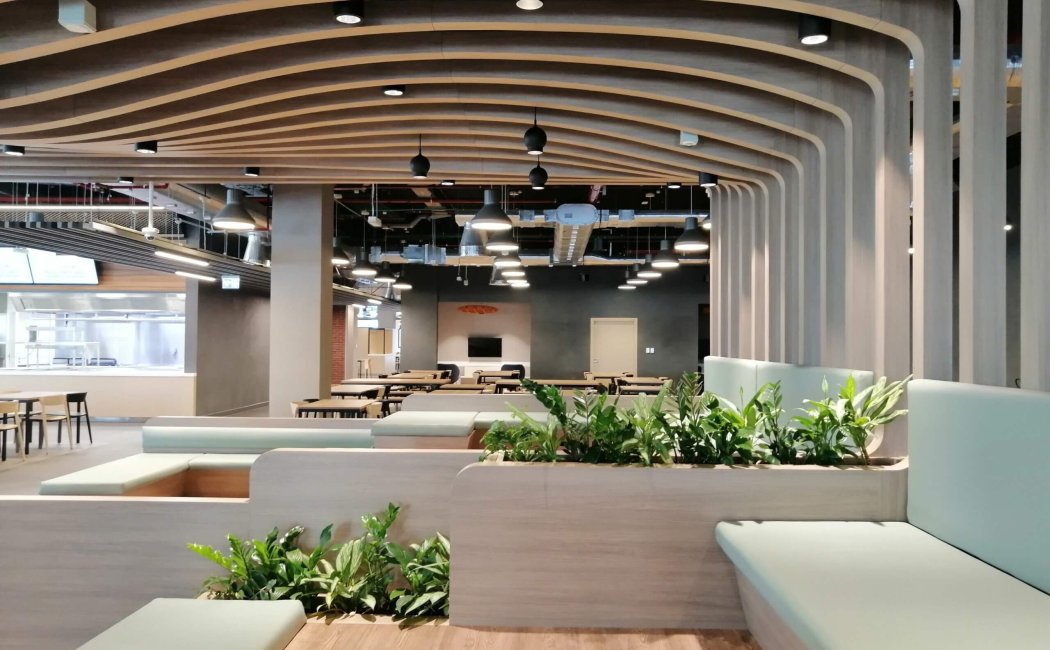
One of the key features of the project was the integration of planter-based seating systems.
These combined:
- Functional seating
- Natural greenery
- Spatial definition
Instead of placing benches separately, greenery was built directly into seating zones.
This created:
- More inviting spaces
- Natural gathering points
- Visually cohesive environments
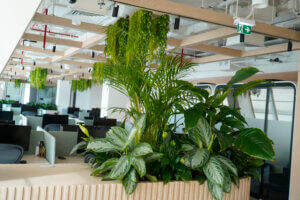
Green Partitions for Space Definition
Open campus areas can feel undefined without structure.
Greenery was used to:
- Subtly separate zones
- Guide movement
- Create semi-private study areas
Unlike walls or barriers, plant-based partitions maintain openness while improving functionality.
Consistent Plant Design Across Zones
A unified plant palette was applied across:
- Walkways
- Seating areas
- Study zones
- Communal spaces
This created a sense of continuity and identity across the campus.
Consistency is especially important in educational environments, where clarity and orientation matter.
The Execution: Designing for Durability and Simplicity
Campus landscaping must perform under constant use.
This project focused on:
High-Durability Materials
- Planters designed to withstand heavy use
- Finishes that resist wear and fading
Low-Maintenance Plant Selection
- Plants suited to UAE climate conditions
- Minimal watering and care requirements
Strategic Placement
- Avoiding congestion
- Maintaining clear movement pathways
- Enhancing—not obstructing—student flow
The goal was to create a system that works continuously without requiring constant intervention.
The Result: A More Engaging Campus Environment
The transformation was both visual and functional.
Improved Student Experience
Spaces became more inviting, encouraging students to:
- Spend more time on campus
- Engage with their environment
- Interact socially
Better Use of Space
Previously underutilized areas became:
- active seating zones
- informal study spaces
- social hubs
Enhanced Visual Identity
The campus gained a more modern, cohesive, and well-designed appearance.
Why Landscaping Matters in Educational Environments
Educational landscaping delivers benefits beyond aesthetics.
Supports Student Wellbeing
Green environments reduce stress and improve mental clarity.
Encourages Social Interaction
Well-designed spaces naturally attract groups and activity.
Enhances Focus and Productivity
Students perform better in comfortable, visually balanced environments.
Improves Campus Perception
A well-maintained campus reflects quality, care, and institutional credibility.
Educational Landscaping in the UAE: Unique Considerations
Designing for the UAE requires specific strategies:
Climate Adaptation
- Heat-resistant plants
- Water-efficient systems
Durability
- Materials that withstand high usage
- Designs that resist damage
Maintenance Efficiency
- Low-intervention solutions
- Predictable upkeep requirements
This ensures long-term performance without excessive cost.
Maintenance: The Long-Term Success Factor
Even in educational environments, maintenance is critical.
Professional landscape maintenance in the UAE ensures:
- consistent plant health
- clean and safe environments
- long-term durability
Without maintenance, landscapes quickly lose their value—especially in high-traffic campuses.
Financial Perspective: Landscaping as an Investment
Educational institutions must balance design with budget.
Well-planned landscaping helps:
- reduce replacement costs
- extend infrastructure lifespan
- improve campus appeal for prospective students
In competitive academic environments, campus experience plays a role in attracting and retaining students.
Positioning: Landscaping as Part of the Learning Experience
This project reflects a broader shift:
Landscaping is no longer separate from education—it supports it.
It contributes to:
- how students feel
- how they interact
- how they engage with their environment
For institutions, this is a strategic advantage.
Conclusion
Educational landscaping in the UAE is redefining how campuses are designed and experienced.
By integrating greenery into everyday student spaces, institutions can create environments that support wellbeing, encourage interaction, and enhance academic performance.
Projects like this demonstrate that landscaping is not just about design—it is about creating spaces that work better for the people who use them.
FAQs
What is educational landscaping?
It involves designing and maintaining green spaces in schools and universities to enhance learning environments and student wellbeing.
Why is landscaping important for universities in the UAE?
It improves student experience, supports wellbeing, and enhances campus appeal.
What type of plants are used in campus landscaping?
Low-maintenance, heat-resistant plants suitable for the UAE climate.
Does landscaping improve student performance?
Yes, studies show that green environments reduce stress and improve focus.
How often should campus landscapes be maintained?
Typically weekly or bi-weekly, depending on the scale of the campus.