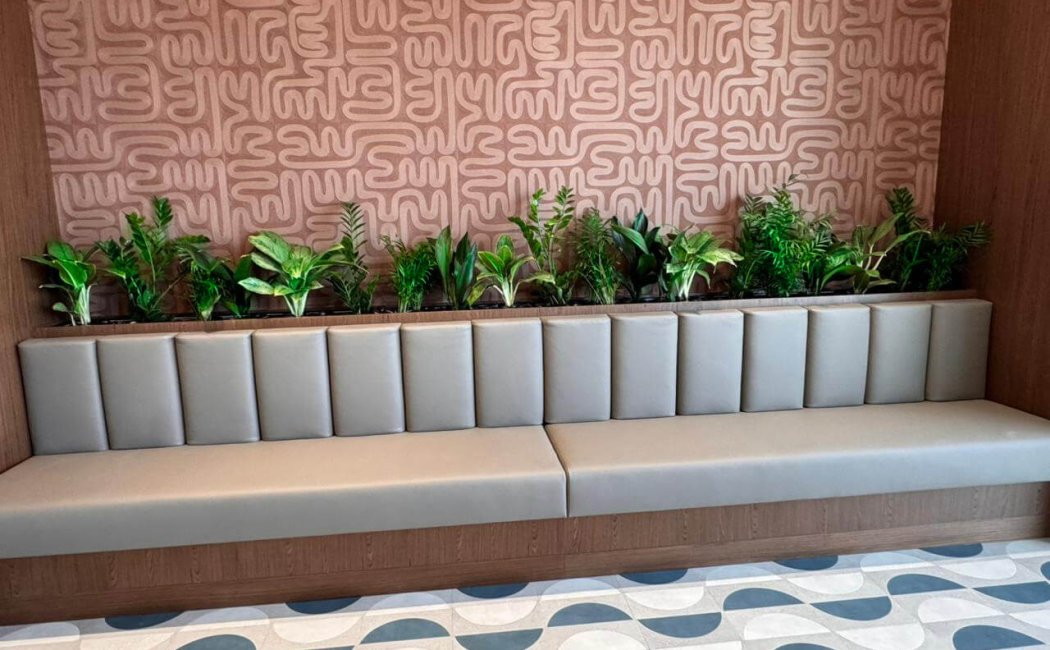
Pruning is the controlled removal of dead, damaged, overgrown or crowded growth so that a plant stays healthy, holds its intended shape and puts its energy into new growth. In a commercial interior, it is also what separates a planting scheme that looks designed from one that looks neglected. For facility managers in offices, hotels and restaurants across the UAE, pruning is one of the most visible parts of professional plant maintenance, and one of the easiest to get wrong without the right training.
Why Does Pruning Matter in a Commercial Interior?
Indoor plants do not stop growing just because they sit inside an air-conditioned building. They reach toward the nearest light source, drop older leaves, and push out new growth in whatever direction the space allows. Left alone, that growth turns a clean planting scheme into something leggy, lopsided or crowded within a few months.
Appearance is only part of the picture. Dead and yellowing leaves tell every guest, tenant and client that nobody is paying attention. Dense, overgrown foliage restricts airflow and gives pests a place to hide. Plants that outgrow their position start to brush against glass, signage, walkways and air vents. Regular pruning keeps each plant healthy, in proportion and exactly where the designer intended it to be.
What Does Professional Pruning Actually Involve?
Professional pruning is a series of deliberate decisions, not a quick trim. On a typical commercial site, a trained horticulturist will:
- Remove dead, yellowing and damaged leaves and stems cleanly, at the correct point on the plant
- Reshape plants so they hold the form chosen for the space, whether that is a tall sculptural specimen or a full, rounded planter
- Thin out dense growth to improve airflow and let light reach the inner leaves
- Cut back leggy growth to encourage fuller, more compact new growth
- Clean tools between plants so that problems are not carried from one planter to the next
The right technique depends on the species. Palms should only have fully dead fronds removed, because cutting green fronds weakens the plant. Ficus and other woody plants respond well to shaping, but their sap can irritate skin, so cuts need to be tidy and the area cleaned afterwards. Snake plants and ZZ plants are pruned at the base, one damaged leaf at a time. Knowing these differences is exactly what separates professional plant maintenance from general cleaning.
When Is the Right Time to Prune in the UAE?
Indoor plants in the UAE do not follow a temperate-climate calendar, but the year still has a rhythm. Summer is the stress season, when heat, strong sun through glazing and heavy air-conditioning loads leave many plants with scorched tips and tired foliage. When the cooler season begins in October and runs through April, plants recover and start to put on fresh growth. That makes November an ideal time to clear summer damage and reshape plants ahead of the busiest months for hotels, restaurants and offices.
Pruning is not a once-a-year job, though. Light pruning, such as removing spent leaves, belongs on every visit. Heavier shaping and thinning is scheduled according to how fast each species grows and how visible it is. Cultivate builds pruning into its regular weekly maintenance rather than treating it as a separate task, which means plants are never allowed to drift far from their intended shape.
Which Plants Need the Most Pruning?
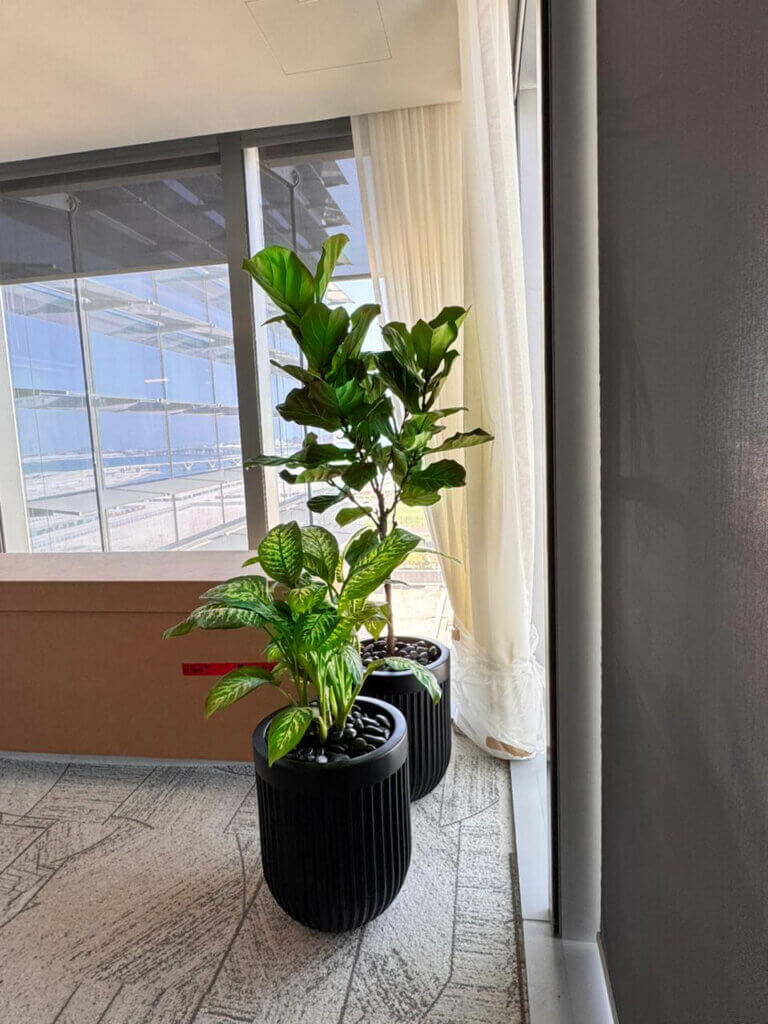
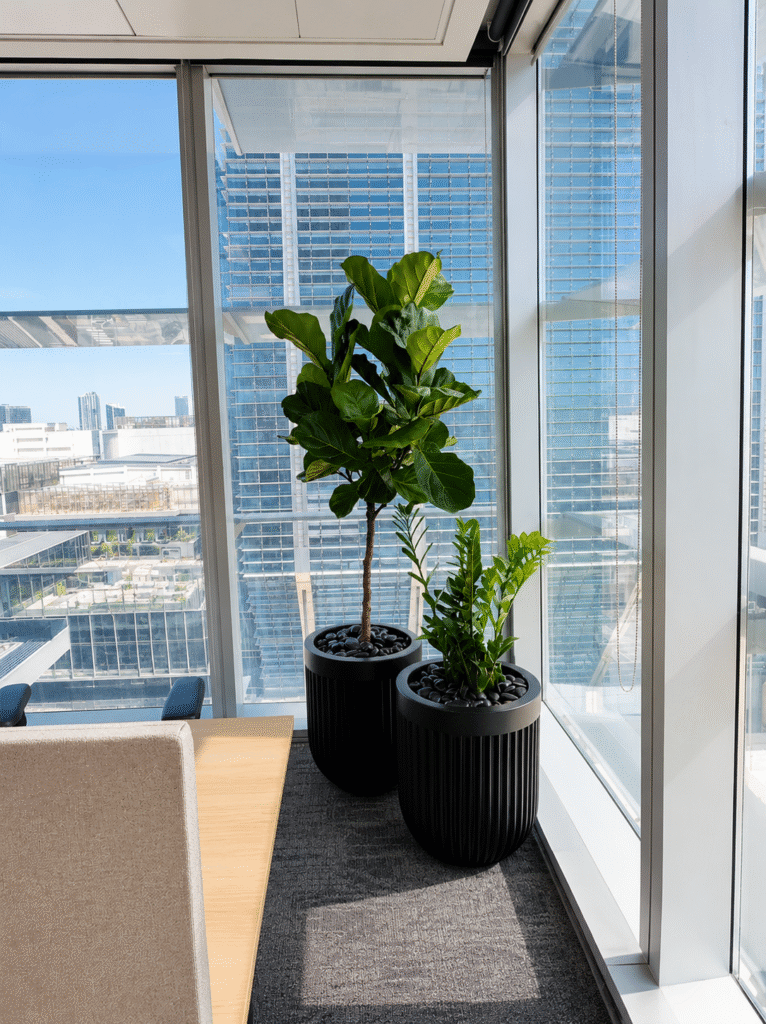
Fast growers such as ficus, pothos and many dracaena varieties need the most regular attention, because they can lose their shape quickly. Slower growers such as ZZ plants and snake plants need far less shaping, but still benefit from having damaged leaves removed promptly. Plants in bright positions near glazing tend to grow faster and more unevenly than those in low light, so a single site can need very different pruning plans from one planter to the next.
What Goes Wrong When Pruning Is Done Without Training?
Pruning mistakes are easy to make and slow to show. Over-pruning removes too much foliage at once and leaves the plant unable to photosynthesise enough to recover. Cutting in the wrong place leaves stubs that rot, and topping a palm can permanently damage it. Inconsistent cuts give a planting scheme a patchy look, and plants damaged this way often end up needing replacement, which costs far more than careful maintenance would have.
How Is Pruning Scheduled on a Commercial Site?
Facility managers do not need to work out a pruning calendar. When Cultivate takes on a site, its horticulturists assess each plant, its position, its light and how quickly it grows, then set the visit rhythm and pruning plan that suits the space. For indoor plants, that rhythm is typically weekly, with deeper shaping built in whenever the plants need it. The result is a planting scheme that looks the same on a quiet Tuesday as it did on opening day.
Pruning is just one of the details Cultivate manages on every visit. As a Dubai-based indoor landscaping and plant maintenance company, we look after offices, hotels and restaurants across the UAE, trimming, shaping and caring for each species according to how it actually grows in the space.
Frequently Asked Questions
1. Why is regular pruning important for indoor plants?
Regular pruning removes dead and damaged leaves, improves airflow and keeps indoor plants healthy and well-shaped.
2. How often should commercial indoor plants be pruned in the UAE?
Light pruning should be done during regular maintenance visits, while extensive shaping depends on plant growth and condition.
3. When is the best time to prune indoor plants in the UAE?
October to April is suitable for extensive pruning, but dead and damaged leaves should be removed throughout the year.
4. Which indoor plants require frequent pruning?
Fast-growing plants such as ficus, pothos and dracaena require more frequent pruning to maintain their shape.
5. What are the risks of improper pruning
Improper pruning can damage healthy growth, weaken plants, encourage rot and increase replacement costs.
Request a plant pruning and health review from Cultivate and see why businesses across the UAE trust us with their plant care.
Related reading: Early Warning Signs of Plant Stress in Commercial Interiors, What a Professional Plant Maintenance Visit Includes.
Contact Cultivate today to schedule a professional plant pruning and maintenance assessment for your commercial space in the UAE.