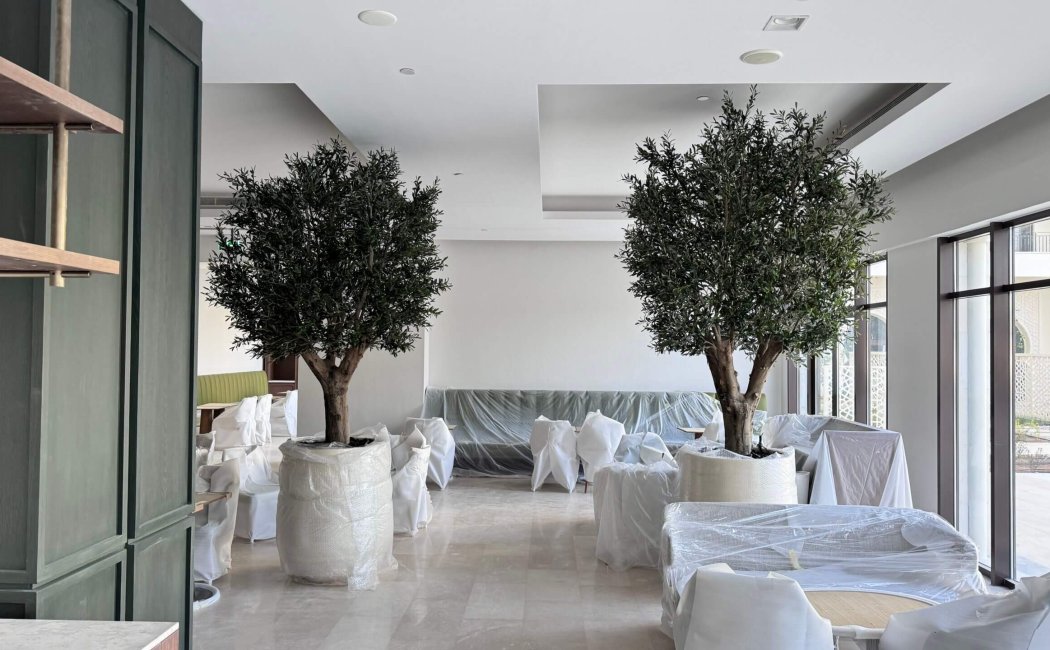
A hotel renovation rarely happens all at once. Operators need to keep rooms sellable and public areas functioning throughout the works, which means planting has to be planned around a live, trading property rather than an empty shell. Done well, an updated planting scheme can do a disproportionate amount of work in making a renovated space feel finished, even while other elements of the refit are still being completed in phases.
Sequencing Planting Around a Phased Refit
Most hotel renovations move floor by floor or zone by zone to minimise disruption to guests and revenue. Planting needs its own position in that sequence, ideally arriving close to the end of each phase so that new specimens are not damaged by ongoing construction dust, equipment movement, or temporary lighting changes. Agreeing this sequencing with the main contractor early avoids plants being installed too soon and needing replacement before the hotel has even reopened that zone.
Protecting Guest Experience in Live Areas
Where renovation works are happening alongside areas that remain open to guests, existing planting often needs temporary protection or relocation rather than removal, since a guest–facing lobby or restaurant cannot simply go bare for the duration of the works. Planning for this upfront, including temporary planting to bridge the gap in high–visibility zones, keeps the guest experience consistent even while the permanent scheme is still being finalised elsewhere in the property.
Matching New Planting to Updated Brand Standards
A renovation is usually driven by a brand refresh or a repositioning, and planting needs to reflect that shift rather than simply replacing old plants with similar ones. A hotel moving toward a warmer, more residential feel will specify differently than one moving toward a sleek, minimal look, and the species and planter choices made during the renovation are a visible signal of that repositioning to returning guests.

Species Resilience During Construction Conditions
Construction conditions, including dust, fluctuating temperatures from HVAC work, and inconsistent light while ceiling and lighting works are in progress, are harder on plants than normal operating conditions. Specifying more resilient species for the transition period, with a planned upgrade to the final palette once construction conditions stabilise, avoids paying twice for specimens that decline before the renovation is even complete.
Coordinating With Multiple Trades
Planting sits at the end of a long chain of other trades, including flooring, millwork, lighting, and MEP, and a schedule slip anywhere upstream pushes planting installation later than planned. Building buffer time into the planting schedule, and maintaining regular communication with the main contractor rather than relying on the original programme date, keeps the planting team ready to install as soon as a zone is actually ready rather than arriving too early or too late.
Related reading: Choosing Between Weekly and Bi-Weekly Maintenance, The True Cost of a Missed Maintenance Visit.
Planning a hotel renovation or refurbishment? Contact Cultivate to discuss planting for your property.