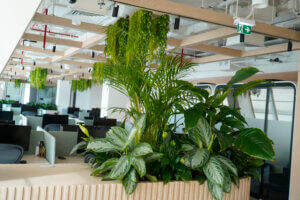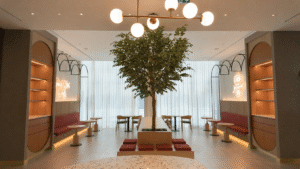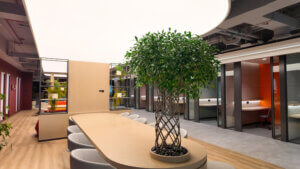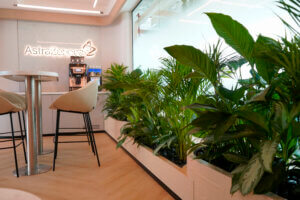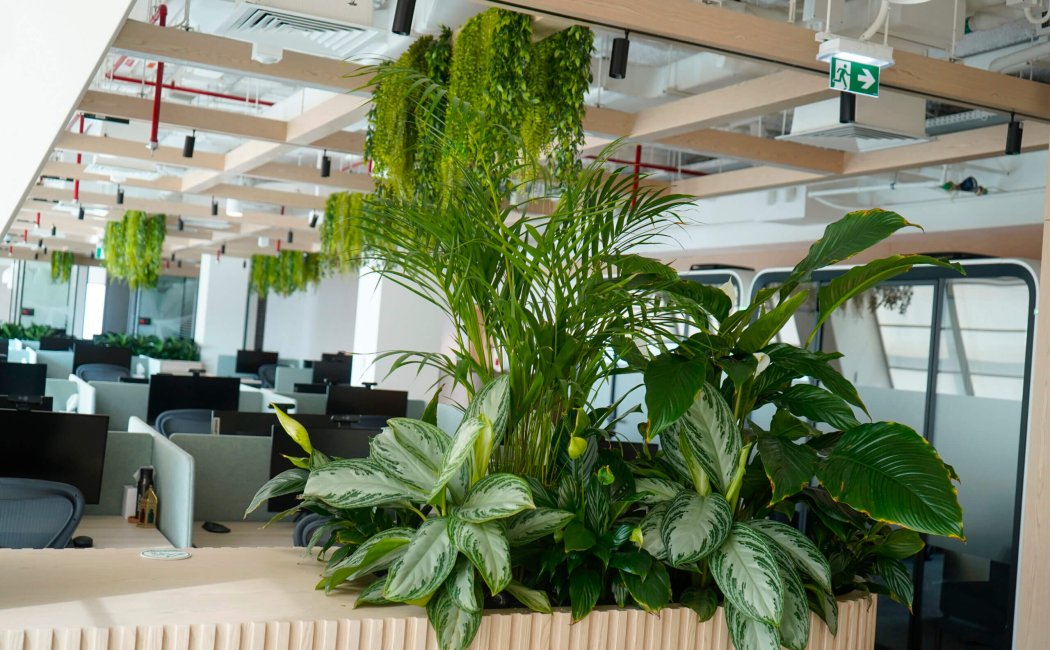
A new indoor plant installation in a commercial space looks its best on the day it is completed. What happens over the following twelve months determines whether it continues to look exceptional or begins the slow decline that ends with replacement and a difficult conversation about what went wrong.
In the UAE, where climate conditions are demanding and commercial spaces run continuously under mechanical cooling, the first year of an installation’s life is the most critical period. It is when the plants are acclimatising to their new environment, when the maintenance programme is establishing its rhythms, and when the decisions made at specification and handover either protect the investment or undermine it.
Understanding why first-year failures happen is the first step to preventing them.
Reason One: Acclimatisation Is Not Managed
Plants that have been grown in nursery conditions, typically in controlled temperature and humidity environments with consistent irrigation, experience genuine stress when they are moved into a commercial interior. The light levels are different, the humidity is lower, particularly in UAE AC-dependent spaces, the air circulation is different, and the watering regime changes.
This acclimatisation period, typically four to eight weeks, is when plants are most vulnerable. A plant that looks healthy at installation may drop leaves, show yellowing, or lose vigour in the first month as it adjusts. This is normal if it is managed. It becomes a problem when it is mistaken for a failing plant and the response is to change the watering dramatically, reposition the plant repeatedly, or replace it prematurely.
A professional maintenance programme manages the acclimatisation period deliberately, monitoring closely, adjusting watering as the plant establishes, and distinguishing between normal adjustment stress and genuine decline. Without this expertise, the acclimatisation period is navigated by guesswork.
Reason Two: The Maintenance Programme Starts Too Late
It is surprisingly common for commercial installations to be completed and handed over without a maintenance contract in place. The landscaping contractor completes the installation, the client takes possession, and the assumption is made that someone will handle the plants, whether that is the facilities team, the cleaning contractor, or an ad hoc arrangement.
In UAE conditions, this gap, even if it is only a few weeks, can cause significant damage. August in a sealed commercial building without professional plant care is not a benign environment. Irrigation goes unmonitored, pest activity goes undetected, and plants that needed close attention during acclimatisation receive none.
The maintenance programme should start on the day of handover, not weeks later when problems have already developed. For procurement teams and facilities managers overseeing new installations, this means the maintenance contract needs to be in place before practical completion, not after.
Reason Three: Species Were Specified Without Accurate Environmental Data
A plant that is correctly specified for its environment will establish well and require relatively modest maintenance to sustain. A plant that has been specified without accurate knowledge of the light levels, humidity, and temperature conditions of its zone will struggle from day one, regardless of how good the maintenance programme is.

The most common specification errors that lead to first-year failure in UAE commercial spaces include:
High-humidity species selection for fully air-conditioned, low-humidity interiors without humidity management built into the care programme
Light-demanding species installed in zones with inadequate natural or supplementary lighting
Large, heavy-rooted specimens planted in undersized planters that restrict root development
Moisture-sensitive species installed with irrigation systems that are difficult to calibrate precisely
These errors are preventable at the design stage, which is why environmental assessment, actual light measurements, HVAC specification review, and planter sizing calculations should be part of the specification process, not an afterthought.
Reason Four: Irrigation Is Not Calibrated Correctly
Overwatering is the single most common cause of first-year plant failure in UAE commercial interiors. It is counterintuitive. In a hot, dry environment, the instinct is to water generously. The reality is that most indoor commercial plants in sealed, air-conditioned buildings require significantly less water than most people assume.
Overwatered plants develop root rot, which is often invisible until the plant collapses. The roots lose their ability to absorb water, so the plant shows symptoms of dehydration despite the soil being wet, including wilting, yellowing, and leaf drop. This can lead to more watering, which accelerates the root rot. By the time the problem is correctly diagnosed, the plant is usually too far gone to recover.
Correct irrigation calibration during the first year requires professional knowledge of the species, the planter drainage system, the soil composition, and the seasonal variation in evapotranspiration rates. It is not something that can be set once and left. It needs to be adjusted as the plant establishes and as conditions change.
Reason Five: The First UAE Summer Is Not Anticipated
An installation completed in October or November will face its first UAE summer by May or June. If the maintenance programme has not been designed to account for the additional stress of summer conditions, including increased irrigation frequency, more vigilant pest monitoring, and management of AC-related dehydration, the plants that have spent six months establishing will face their most challenging period without appropriate support.
The first summer is a known risk and should be planned for explicitly. A maintenance provider who does not discuss summer adjustment as part of the initial programme is not accounting for one of the most significant variables in the UAE landscape maintenance calendar.
Reason Five: The First UAE Summer Is Not Anticipated
An installation completed in October or November will face its first UAE summer by May or June. If the maintenance programme has not been designed to account for the additional stress of summer conditions, including increased irrigation frequency, more vigilant pest monitoring, and management of AC-related dehydration, the plants that have spent six months establishing will face their most challenging period without appropriate support.
The first summer is a known risk and should be planned for explicitly. A maintenance provider who does not discuss summer adjustment as part of the initial programme is not accounting for one of the most significant variables in the UAE landscape maintenance calendar.
What a Proper First-Year Programme Looks Like
A maintenance programme designed to get a new installation through its first year successfully in the UAE should include:
Increased visit frequency during the first eight weeks of acclimatisation
Deliberate irrigation calibration for the establishment period, adjusted as the plant roots develop
Light assessment and supplementary lighting confirmation before any live planting is finalised
Explicit seasonal adjustment planning for the first UAE summer
Clear replacement policy defining what triggers a replacement, who makes the decision, and whether replacement is included in the contract
Post-visit reporting that tracks plant health over time, so trends are visible before they become crises
The goal of the first year is to get the installation to a point where it is established, stable, and performing consistently. Plants that make it through their first year well, properly acclimatised, with a calibrated irrigation programme and professional seasonal management, are significantly more resilient going forward. The first year is where the investment is protected or lost.