Dubai’s co-working and flexible office sector has grown into one of the most competitive segments of the commercial property market. New operators enter regularly, established brands expand across multiple locations and members increasingly choose a workspace the way they would choose a hotel: based on how the space looks, feels and functions, not just its location or price.
In this environment, indoor landscaping has become one of the clearest ways operators differentiate their offering. A co-working space with considered, well-maintained greenery signals quality and care in a way that few other design elements can match, and it does so at a cost that is modest relative to other differentiators like premium furniture or bespoke joinery.
Why Landscaping Matters More in Co-Working Than Traditional Offices
Traditional corporate offices are occupied by employees who have limited choice over where they work. Co-working spaces are chosen, repeatedly, by members who could leave for a competitor down the street. This changes the role that the physical environment plays: it is not just background to daily work, it is part of what is being sold.
Indoor plants contribute directly to the qualities that co-working members consistently say they value: a sense of calm in a busy environment, a workspace that feels different from a conventional corporate office, and an atmosphere that supports focus without feeling sterile. These are exactly the qualities that well-specified indoor landscaping delivers.
Where Landscaping Works Hardest in Flexible Workspaces
The Arrival Experience
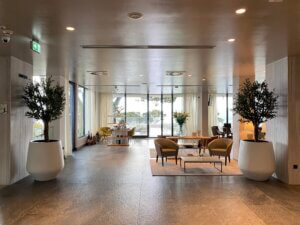
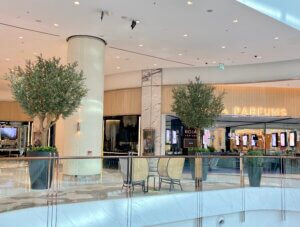
Co-working operators, like hospitality brands, understand that the first moments of arrival shape a member’s entire perception of the space. A well-considered plant feature at reception, whether a statement specimen tree or a green wall behind the front desk, sets a tone of quality before a member has spoken to anyone or seen a single desk.
Zone Definition in Open Floor Plates
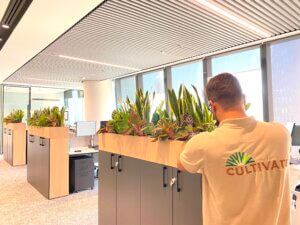
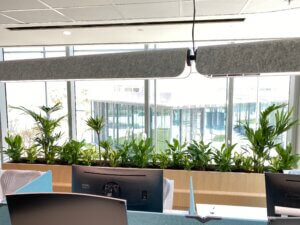
Flexible workspaces typically combine several distinct environments within one open floor plate: hot desking areas, private offices, meeting rooms, informal lounge zones and phone booths. Planted dividers and clusters of tall specimens are an effective way to define these zones without the cost and inflexibility of permanent walls, which matters particularly for operators who need to reconfigure layouts as membership demand changes.
Shared Amenity Spaces
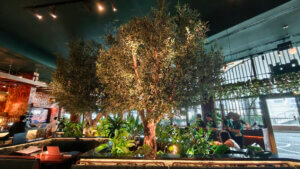
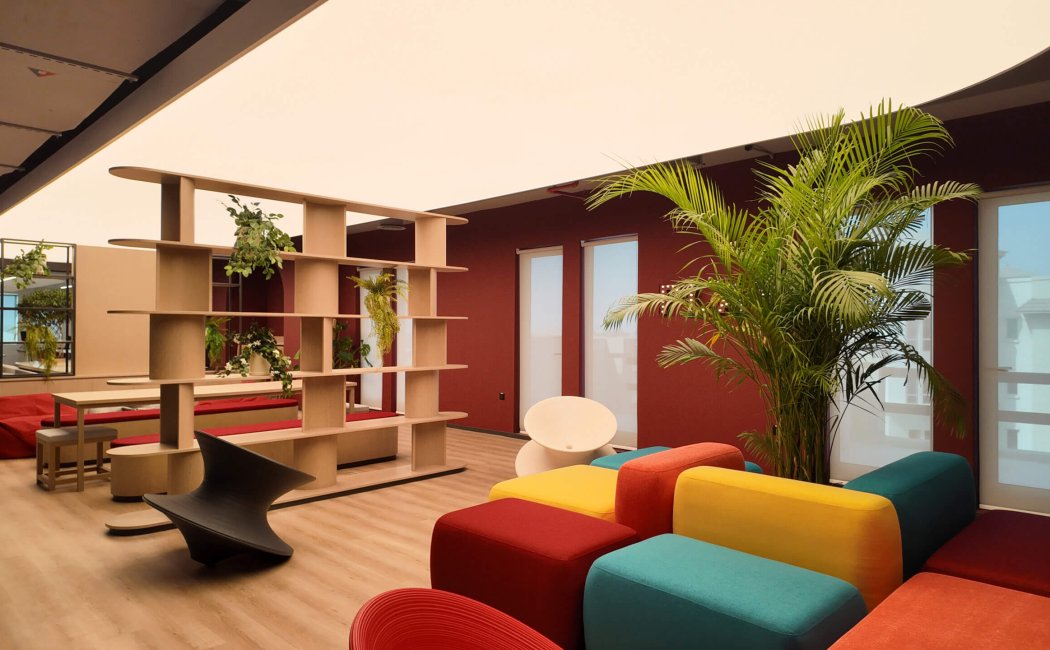
Kitchens, breakout lounges and informal meeting areas are where co-working operators most directly compete on member experience. These are the spaces members photograph, gather in and judge the operator’s investment by. Indoor plants, positioned thoughtfully in these zones, do disproportionate work in making a shared amenity space feel considered rather than purely functional.

Practical Considerations for Co-Working Operators
Multi-Site Consistency
Operators running several locations across Dubai need a landscaping approach that can be replicated consistently across sites while still feeling tailored to each individual space. Working with a single landscaping partner across a portfolio, rather than sourcing locally at each site, produces a more coherent brand experience and simplifies the maintenance relationship considerably.
High Turnover, High Traffic
Co-working spaces see significantly higher and more variable foot traffic than a typical single-tenant office. Species selection needs to account for this: robust, resilient plants in high-traffic zones, more delicate or statement specimens reserved for lower-traffic areas where they will not be constantly disturbed.
Flexible Maintenance Models
Because co-working operators often run lean facilities teams, a maintenance contract that requires minimal internal coordination is particularly valuable. Contracts with clear scheduling, defined scope and straightforward reporting reduce the operational burden on operators who are already managing a wide range of member-facing responsibilities.
Live, Artificial or a Mix
Co-working spaces vary significantly in their light conditions, from daylit ground floor locations to interior floors in towers with limited natural light. A hybrid approach, using live plants where conditions genuinely support them and high-quality artificial planting where they do not, tends to produce the most consistent results across an operator’s full portfolio.
This is particularly relevant for operators expanding into new buildings quickly, where the light conditions of a new site may not be fully understood until after the lease is signed. A landscaping partner who can assess each new location honestly, rather than defaulting to the same specification regardless of conditions, delivers a better long-term outcome.
The Competitive Argument
As Dubai’s co-working market matures, the operators pulling ahead are increasingly those who treat the physical environment as a genuine differentiator rather than an afterthought. Indoor landscaping, properly specified and properly maintained, is one of the most visible and cost-effective ways to make that differentiation real.
For operators evaluating their next fit-out or refurbishment, the question worth asking is not whether to include plants, but whether the current approach reflects the same level of consideration given to the furniture, the branding and the member experience overall.